

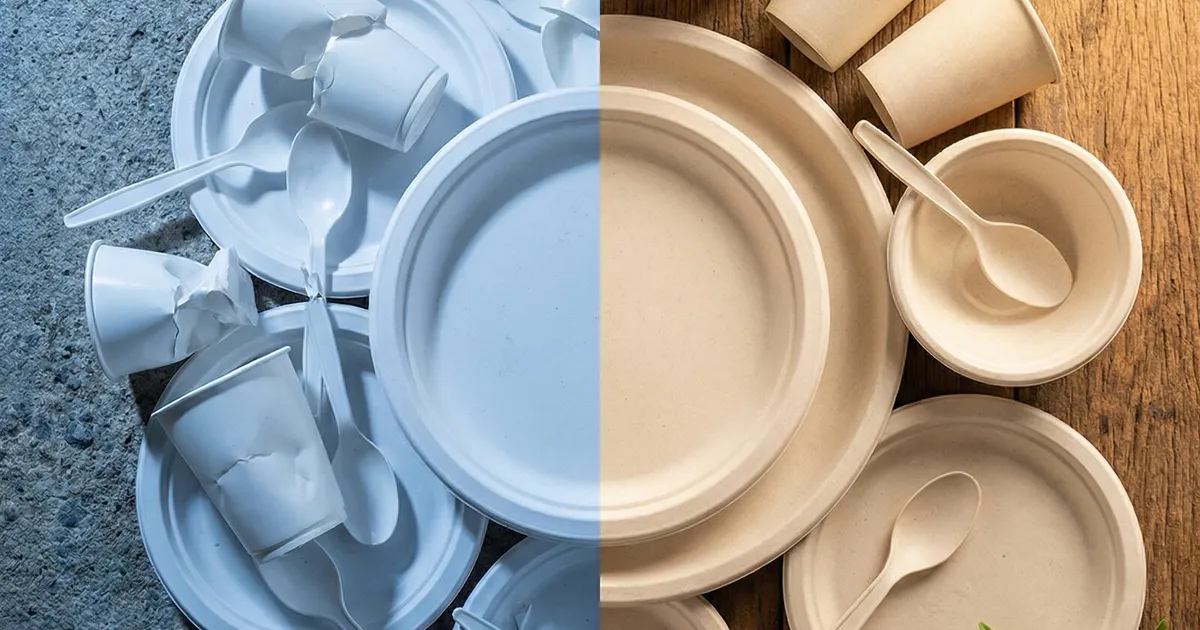
Single Use Plastic Ban in India: What Is Actually Being Enforced in 2025
The ban has been in place since July 2022. Three years later, enforcement is uneven but accelerating. Here is what the current ground reality looks like across different states.
Last September in Ahmedabad, the AMC ran a drive through the wedding halls on SG Highway. I heard about it in the usual way — a caterer called me on Saturday morning to ask if we could deliver 4,000 plates by Monday because the venue had been fined and his existing plastic stock was suddenly unusable. We could not, but the call kept coming back to me for weeks afterward.
That is the ground reality of the plastic ban in India right now. The national notification is three years old. Enforcement is uneven. And when a drive does happen, it creates scrambles like that one.
India’s ban on identified single-use plastic items came into effect on July 1, 2022. It covered 19 categories of items including plastic plates, cups, glasses, cutlery, straws, and polystyrene tableware. Three years in, the picture is more complex than either “the ban is working” or “nothing has changed.”
What the ban covers and what it does not
The July 2022 notification under the Environment Protection Act covers specific single-use plastic items. For food service, the relevant banned items are:
Plastic plates, cups, glasses, cutlery (spoons, forks, knives), straws made of plastic, and expanded polystyrene (thermocol) items used in food service.
What the ban does not cover: PET bottles, multilayer packaging for packaged food and beverages, pouches for liquids, and multi-use plastic containers. The scope is explicitly the throwaway-after-one-use food service category.
Enforcement state by state
Enforcement has been handled at the state level, and the variation is significant.
Maharashtra and Delhi have been the most active in enforcement actions, with municipal corporations conducting regular inspections at markets, restaurants, and catering operations. Fines for first violations start at Rs 5,000 and go up to Rs 25,000 for repeat offenders under state-level rules.
Karnataka introduced its own state-level ban on plastic carry bags, plates, and cups in 2016, years before the national ban. Enforcement in Bengaluru and Mysuru has been relatively more consistent than in newer-to-enforcement cities.
Gujarat has seen increasing enforcement activity in Ahmedabad and Surat following the national ban, particularly at large event venues and catering operations.
Tamil Nadu has state-level rules in place and enforcement activity, but the focus has been more on plastic bags than on food service items.
Punjab and Haryana have had slower enforcement roll-out, though this is beginning to change with increased central government pressure on compliance.
The event venue enforcement pattern
The enforcement pattern that is clearest across states is focused on events. Municipal authorities have found that large-scale events, weddings, corporate functions, and public gatherings represent concentrated violations that are easier to inspect and penalise than distributing enforcement across thousands of small food stalls.
Wedding venue operators in major cities are increasingly being inspected and held responsible for the tableware used at events on their premises. In some states, the venue can be held liable even if the caterer sourced the banned items, not the venue itself.
For caterers, this creates a reputational and financial risk that sits above the cost of the plates.
What actually happens during an inspection
A municipal inspection for plastic ban compliance typically involves:
Visual inspection of plates, cups, and cutlery in use or in storage. Physical test of whether items are banned plastic or compliant material. In some jurisdictions, on-site confiscation of banned items and immediate fines.
The challenge for inspectors is distinguishing between banned and compliant plastic products quickly. This has sometimes resulted in aggressive enforcement of all disposable items regardless of material. Carrying certification or product documentation (FSSAI certificate, manufacturer compliance statement) has helped operators avoid incorrect penalties.
The honest forecast
Enforcement will continue to increase. The political pressure for visible action on plastic pollution is not decreasing, and large-scale events are the highest-visibility enforcement targets.
The window for “figure it out later” procurement decisions on tableware is narrowing. A catering operation that has not made the switch from plastic plates, cups, and cutlery faces increasing risk on two fronts: direct enforcement penalties and client pressure from venues and corporates with their own sustainability commitments.
The switch is operationally straightforward once you have tested the alternatives. The complication is not finding better products. It is the inertia of existing supply chains.
For caterers, event operators, and institutional buyers looking to switch, Aura Farmers supplies FSSAI-certified rice husk tableware across India. Inquire on WhatsApp at +91 81403 47773.