

A Practical Guide for Caterers Going Plastic-Free in 2025
The ban is real. The enforcement is increasing. Here's what actually changes when you switch your event tableware — and how to make the switch without adding operational headaches.
A catering partner in Ahmedabad called me after his second municipal fine in six months. His question was not whether to switch — that decision was already made for him by enforcement. His question was how to switch without disrupting service at four weddings booked for the next fortnight. That is the conversation this post is written for.
The single-use plastic ban in India covers plates, cups, cutlery, and food packaging. It has been in effect since July 2022. Enforcement has been uneven — but that is changing, particularly in Gujarat and Maharashtra, where municipal authorities have started issuing fines at event venues and catering operations.
If you are running a catering business or managing event F&B, you have probably been thinking about this. Here is a practical look at the switch — not the marketing version, the operational one.
What the ban actually covers
The Ministry of Environment notification bans single-use plastic items including:
- Plastic plates, cups, glasses
- Plastic cutlery (forks, spoons, knives, straws)
- Plastic wrapping and packaging around sweets and food items
- Polystyrene (thermocol) cups and plates
What it does NOT ban: plastic bottles, multi-use plastic containers, food-grade pouches for packaged goods. The scope is specifically the throwaway-after-one-meal category.
For most event caterers, this means plates, cups, and cutlery are the primary concern.
The realistic alternatives
Three main categories have emerged in the Indian market:
1. Areca/leaf plates Traditional, widely available. Good for dry or semi-dry food. Structural limitations: leaf plates absorb moisture and soften under liquid foods. Works well for snacks, dry items, light meals. Not ideal for full thali service with multiple gravy dishes.
2. Moulded pulp Mass-market substitute. Better structure than leaf. Cheaper at scale. The downside: pulp absorbs water in 15–20 minutes under wet food. For buffet lines where plates sit while guests serve themselves, this becomes a problem. Also tends to require bleaching in industrial production.
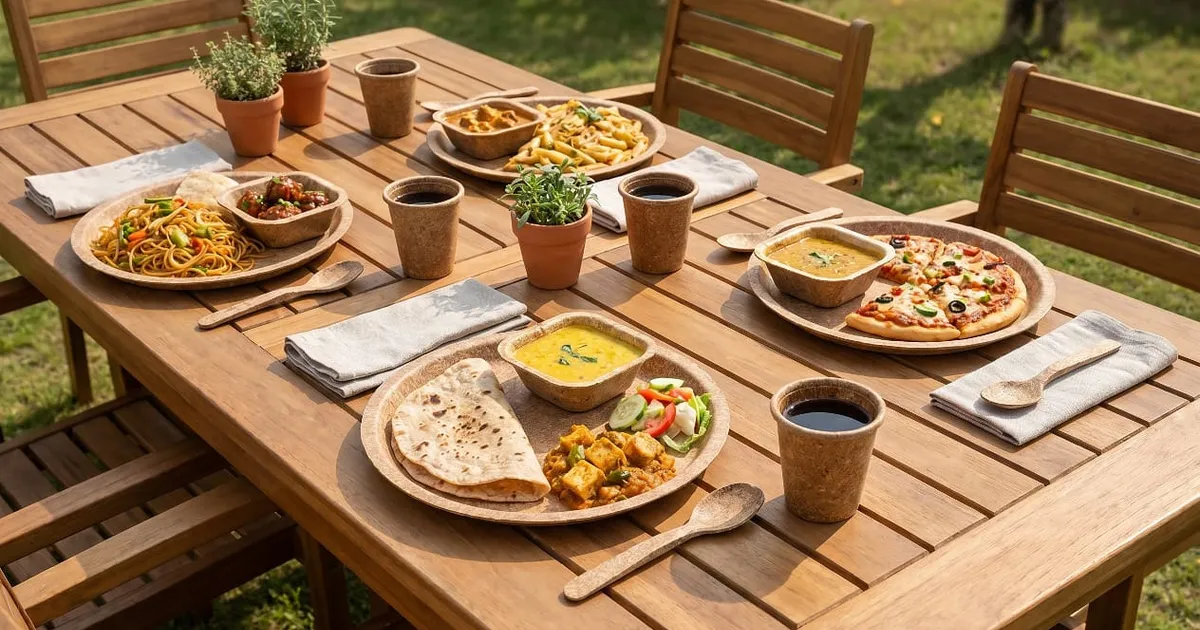
3. Rice husk / agricultural composite Higher unit cost than pulp. Better structural performance: moisture-resistant, holds shape under full thali or curry service. The product we make. Not a fit for every budget, but for premium events or catering operations where plate failure is not an option — it’s the right call.
How to think about unit cost
The comparison point isn’t “plastic vs. biodegradable per piece.” That framing always makes biodegradable look expensive.
The real comparison is total cost per cover — including:
- Plate cost
- Staff time managing plate failure (replacements mid-service, guest complaints)
- Venue cleanup for soggy plates
- Brand/reputation impact for premium events
A ₹3–4 per piece price difference is meaningful at 10,000 pieces. It’s less meaningful when you consider that a plate collapsing during a wedding dinner service has a different kind of cost.
The right product depends on what you’re serving and who you’re serving it to.
Practical questions caterers ask us
Can I mix products? Yes. Many caterers use rice husk plates for main course service and lower-cost pulp for dessert or snack courses where moisture resistance matters less. Smart procurement, not brand loyalty.
Lead time for bulk orders? We typically confirm availability within 24 hours of inquiry. Standard orders ship within 3–5 working days from Ahmedabad. For large volume (10,000+ pieces), give us a week’s notice if possible.
Pack sizes? Available in 25, 50, and 100 piece packs for most SKUs. Bulk pricing for orders over 500 pieces — inquire via WhatsApp for custom quotes.
Storage? Dry storage, away from moisture. Shelf life is 12 months from manufacture. Biodegradable products are not immune to humidity damage before use — store them like you’d store paper goods.
Certification? All Aura products are FSSAI food-safe certified. No lead, no BPA, no synthetic coating.
Making the switch
The actual logistics aren’t complicated:
- Audit your current tableware spend — know your per-event cost per cover
- Pilot on a smaller event — 200–500 covers, a single menu type, before committing to full switchover
- Train staff on disposal — especially for composting partnerships if you’re running a sustainable venue
- Communicate it — guests at premium events increasingly notice and appreciate the switch. It’s worth mentioning in event rundowns.
The regulatory pressure is going in one direction. The lead time to find, test, and operationalize a new tableware supplier is longer than most caterers assume. Starting that process now, before an enforcement action creates urgency, is the sensible move.
For bulk pricing and availability, contact us directly on WhatsApp: +91 81403 47773. We work with caterers, event venues, corporate canteens, and institutional buyers across Gujarat.